


A learner searches an online course, skim what is taught, and look at where to enroll. Then they close the page without signing up. That does not always mean they have lost interest.
Choosing an online education course can take time. Most people weigh options, look at the price, and check if they can fit the work into their schedule. So, even someone who is interested in a course may leave and plan to come back later.
For education brands, the hard part is keeping in touch with people who showed interest but did not enroll. They may return later, or they may find another course instead.
It is not enough to just get clicks to the course page. The real challenge is turning that early interest into online course enrollment. Brands need to know what learners want and what they need between the course visit and making their final decision.
Before they enroll, learners tend to make many small choices. They may :
Each step shows a different level of intent. A view of a course page is not the same as enrollment. Different people need different follow-up based on where they stopped.
Here are a few reasons why learners leave without getting enrolled in online course :
Some people look at a few options before they commit. They compare what is actually taught, who teaches it, what is the cost of course, how long it will take, and whether it helps in their career. They often do this across more than one site.
So, if they close your page, it does not always mean they are done. They may just need a little more time to check everything.
Another reason is time. A learner might like the course but still doubt they can fit it in. Work can be busy. Family duties take space. School and daily tasks add pressure. For example, they may think, “I like this course, but can I manage it with my schedule?” After that, they plan to join later.
If you add choices that feel easier, it can help. Self-paced lessons, live sessions at flexible times, and recorded classes can lower that worry.
Sometimes a visitor needs more facts. They may want to know how good the course is, what kind of certificate they get, and what skills they will build. They also want to know who the instructor is and what the learning experience feels like.
If the page does not answer these points in a clear way, they may leave and search for more details elsewhere. They might still come back, but many do not. When course facts, reviews, FAQs, and learning outcomes can help reduce user hesitation.
Some visitors are still in research mode. They may not be set to enroll yet. They might compare other courses, scan prices, read comments from past learners, or ask if the course fits their needs.
This is a common step in a choice that costs money and takes time. So when someone leaves without signing up, it can simply mean they are not ready.
Sometimes, a learner leaves a course page even though they were interested in enrolling. They may get a phone call, receive a notification, get busy with work, or simply close the browser and forget to return.
This doesn't always mean they changed their mind. Sometimes, they simply got distracted.
When interested learners leave without enrolling, a few things can happen:
This does not mean the campaign failed to attract the right people. It may simply mean there was no proper way to bring interested learners back after they left.
Without a follow-up plan, brands can keep spending money to reach new people while forgetting those who already showed interest. Over time, this can mean more missed enrollment opportunities and less value from the traffic the brand has already paid for.
This is where education remarketing earns its place in the marketing mix - not as an add-on, but as the mechanism that closes the gap left open by the first visit.
Remarketing works by displaying relevant ads to eligible previous website visitors after they leave your course page. Instead of losing that visitor to whatever they bro wse next, the brand stays visible – on social feeds, video platforms, or other sites the person visits – keeping the course in view until the learner is ready to decide.
Not every visitor should see the same follow-up message. Understanding Learner’s behavior on the site is one of the clearest signals available, and it can be used to group audiences meaningfully:
|
Behavior on the site |
Relevant re-engagement |
|
Viewed a course |
Course-related messaging |
|
Explored several courses |
Category or comparison content |
|
Visited enrollment information |
Enrollment-focused communication |
|
Started registration |
Registration completion reminders |
|
Previously enrolled |
Relevant post-course engagement |
This kind of segmentation turns a single, generic ad campaign into several smaller, more relevant conversations — each one shaped by what the visitor actually did.
A visitor researching a course may need more information, while someone who has already started registration may need a reminder to complete the process. Sending the same ad to both wastes an opportunity: A learner who is still researching may need a testimonial or a quick look at the syllabus. But someone who almost completed registration may only need a simple reminder to finish.
The course category a visitor explored, how deeply they engaged, and where they are in the decision process can all shape more relevant creative. This is where personalized remarketing starts to outperform generic ad recall - the creative isn't generic, it reflects what the brand already knows about that specific visitor's interests and where they left off.
Google, Meta, YouTube, and programmatic advertising all play a role in keeping a brand visible to eligible audiences as they move across platforms. A learner who ignores a display ad might respond to a short video, and one who skips a social post might click a search ad later that week. Spreading re-engagement across channels increases the chances of catching someone at the right moment.
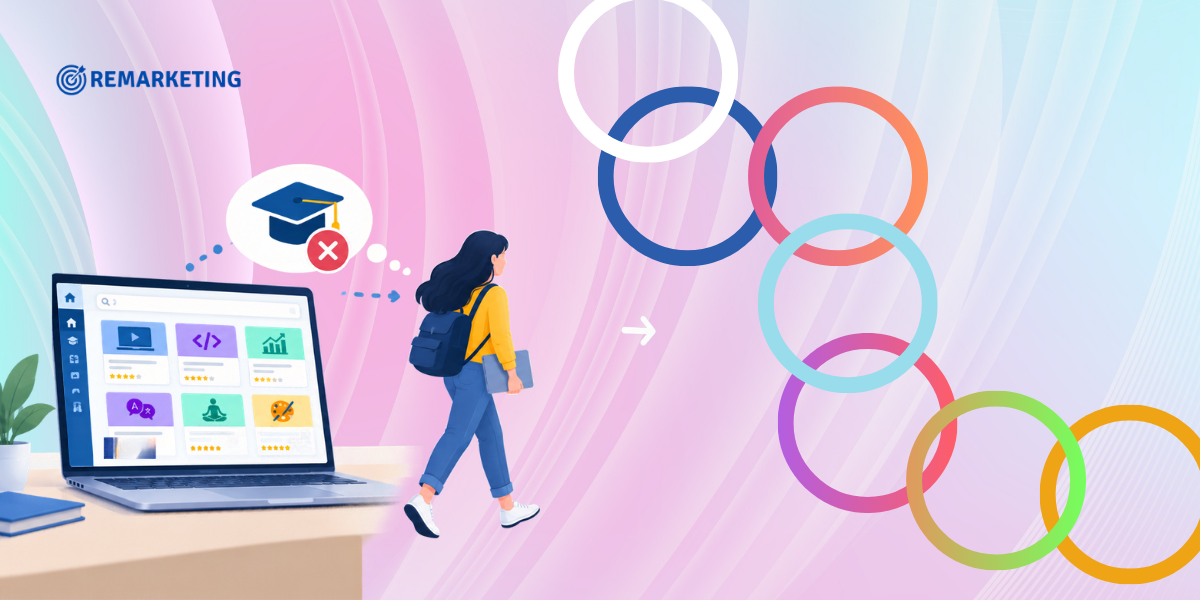
A simple learner journey helps make the solution concrete:
This is an illustrative path through the education conversion funnel, not a guaranteed outcome. Actual results depend on audience quality, messaging, timing, and how well the campaign is executed - but it shows what re-engagement can look like when it's built around actual visitor intent rather than guesswork. For a similar pattern in a different industry, see how fashion shoppers leave without buying and what brings them back.
A basic remarketing campaign and a genuinely effective one can look similar but perform very differently. Common shortcomings include:
These gaps are why so many campaigns generate impressions without meaningfully improving the conversion funnel. Education brands may benefit from audience intelligence, behavioral retargeting, and coordinated remarketing that reflects the learner's actual journey rather than treating every visitor as interchangeable.
Closing these gaps usually requires more than an ad platform's default settings. It calls for audience intelligence, behavioral targeting, and coordinated campaigns built around each stage of the online course conversion funnel - which is where working with a dedicated retargeting service tends to outperform a self-managed, one-size-fits-all setup.
Turning browsing into registrations takes more than switching on a retargeting pixel. It requires a structured approach built around how learners actually move through the conversion funnel:
Remarketing Agency helps course platforms reconnect with learners who have already shown interest. - building remarketing for education courses that's based on how visitors actually engage rather than one-size-fits-all ad sets. If you're evaluating a remarketing ad agency or a broader retargeting service for your course platform, the Education & Online Courses service page and Smart Remarketing offering outline how this segmentation and creative work come together for education-specific audiences.
A learner leaving a course page without enrolling doesn't always mean they are no longer interested. They may be comparing courses, unsure about the price, distracted, or simply looking for more information. These are normal parts of choosing an online education course.
Education brands can turn more of this interest into enrollment by understanding how visitors behave. They can see where learners stopped in their journey. Then, they can show relevant messages that encourage them to return. Sometimes, the right reminder is all a learner needs to return and continue their journey.
That shift—from generic retargeting to a more behavior-driven approach - can help turn a course page that gets traffic into one that also creates more opportunities for enrollment.

5 min to read