


Abandonment remains a major challenge for e-commerce retailers, with the latest data showing a global rate of 76.9%. Sometimes a customer sees a product on the website and adds it to the cart and leaves without making a purchase. There could be many reasons for this, they may be comparing the same product with another brand. or simply getting confused between two products or brands. And after a day or two, they might completely forget about it.
In fashion ecommerce, the person who spends 30 seconds on your homepage is completely different from the one who spent five minutes looking at a product, checking the size chart, viewing several photos, and adding it to their cart. Both left without buying. But their intent was completely different. This blog by remarketing.agency will tell you all the reasons why online fashion shoppers leave without buying, and from those reasons you will be able to understand customer behavior.
Once you start looking at shopper behavior, the reasons behind abandoned purchases become much easier to understand — and easier to act on.
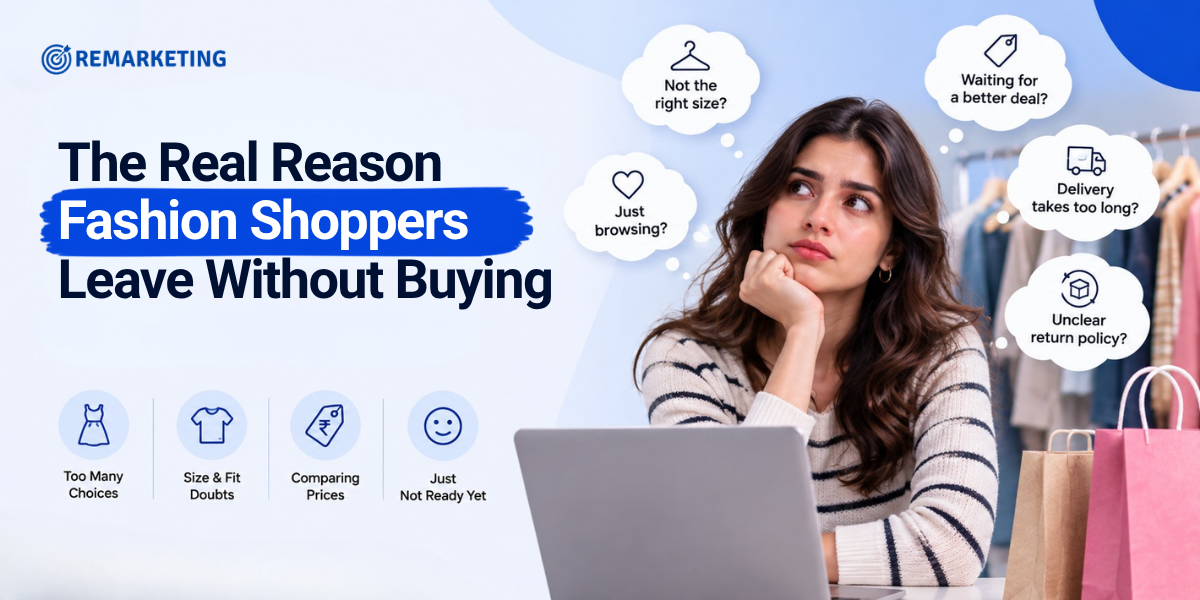
Price is not the only reason why people do not buy. Think about your own online fashion shopping experience. You may add something to your cart and then decide to think about it. You may want to check another website first. You may be unsure about the size. You may want to see how the product looks on a different body type. Sometimes, you simply get distracted.
Fashion shopping is more emotional than many other online purchases. People care about how something looks, how it fits, whether it suits their style, how quickly it will arrive, and whether it can be easily returned. So when someone leaves, don't immediately assume the product failed. They may simply need more information, more confidence, or more time before buying.
That is why understanding why customers do not complete purchases is so important. Once you know where the hesitation happens, you can decide what to do next instead of sending the same discount message to everyone.
Here is a complete list of reasons why customers do not purchase your product and just simply leave.
Sometimes, people visit a fashion website just to browse or see new trends. Thinking, “I'll buy it later.” So, they left — not because they did not like the product or something else, but because they were not ready to purchase your product at that particular moment.
In this case, pushing a big discount may not be the best approach. A simple reminder, a new collection, or a similar product may be enough to bring them back when they are ready.
The idea is simple: stay relevant without putting pressure on the customer.
Fashion shoppers rarely look at only one store. Someone searching for a party dress might visit five different websites. A shopper looking for sneakers may compare styles, colors, prices, reviews, delivery options, and discounts before deciding. This means a visitor can be genuinely interested in your product and still leave. They have not said “no.” They are saying, “Let me compare.”
So, when someone leaves your website, it does not always mean they are no longer interested. They may simply want to see what other brands offer.
For example, if someone keeps viewing the same jacket, showing that jacket again can remind them of their interest. You can also show reviews, styling ideas, or similar products to help them decide.
Size and fit are common reasons shoppers hesitate before buying clothes online. A customer may like a dress or pair of jeans but still wonder:
If someone spends time checking a product but leaves without buying, their behavior shows that they are interested but also have some hesitation.
Instead of showing them a generic “Come back and shop” ad, remarketing can be more helpful. The ad could remind them of the product they viewed while highlighting the size guide, fit details, customer reviews, or easy return options. This gives the shopper more confidence and helps remove the doubt that may have stopped them from buying the first time.
Trust becomes even more important when someone is buying from a brand for the first time. First-time shoppers may like your products but still hesitate because they don't know your brand yet.
They may think:
This hesitation is normal, especially for a new or lesser-known fashion brand. Remarketing can help build that missing trust. Instead of showing only a discount, your ads can highlight customer reviews, easy returns, secure payments, product quality, or real customer experiences. Sometimes the customer does not need another discount. They need a reason to trust you.
Sometimes, a shopper leaves for a very simple reason — they just get distracted. Maybe they were shopping during a break, received a call, switched to another tab, or got busy with work. They liked the product but simply didn't finish the purchase.
This does not mean their interest is gone. They have already visited your website, seen your products, and shown some level of interest. With the right fashion remarketing ad, you can remind them about what they were looking at and bring them back to continue where they stopped. You do not always need to start the customer journey again. Sometimes, you just need to remind them to continue it.
Buying fashion items online can sometimes feel uncertain. Customers cannot touch the fabric, try the product on, or see the exact color in person. Even if they like a product, they may still wonder:
These doubts can hold or stop a purchase. This is where remarketing can help. If someone spends time viewing a product but leaves without buying, the next ad can focus on building confidence. Show customer reviews, product videos, close-up images, fabric details, or real customer photos instead of simply pushing a discount.
This sounds small, but it happens all the time. A shopper may be interested in a product but want to check something before purchasing.
So they leave with the intention of coming back. But people are busy. The next website catches their attention. Then social media. Then work. Then dinner. And suddenly, the product they were considering is no longer at the front of their mind. This is where staying relevant becomes important. A useful reminder can bring that product back into consideration without forcing the customer to start their search again.
Traditional retargeting can be useful, but showing the same ad to every visitor is not always effective. Imagine two people visiting the same fashion website.
Visitor A : spends four minutes checking a dress, looks at the size guide, and views the product photos several times.
Visitor B : visits the homepage, looks around for a few seconds, and leaves.
Neither bought, but their behavior is very different. So, why show them the same ad? With personalized remarketing, brands can create different audiences based on actions such as :
This helps brands show more relevant ads based on what each shopper actually did, instead of treating every visitor the same.
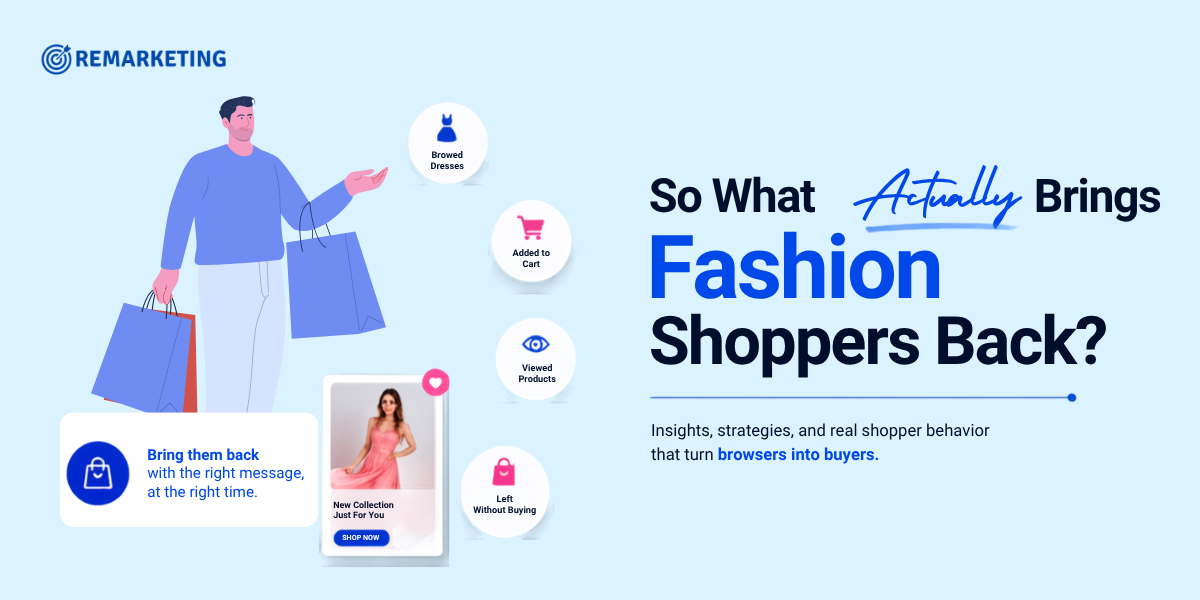
Knowing why shoppers leave is useful, but the real value comes from knowing what to do with that information. It takes these different behaviors and turns them into separate audiences, messages, and campaigns instead of showing the same ad to everyone.
These visitors are still exploring and may not be ready to buy. A remarketing agency can show them softer ads featuring new collections, popular products, styling ideas, or useful content instead of pushing them straight toward a purchase.
These shoppers have already shown interest in a specific product. Their behavior can be used to create ads featuring the products they viewed, along with similar styles or products that may interest them.
Adding a product to the cart is a stronger buying signal. These shoppers can be placed into a separate audience and shown timely reminders about the items they left in their cart, making it easier for them to return and complete the purchase.
When someone keeps coming back without buying, there is a reason to pay attention. Look at what customers repeatedly view and adjust the messaging based on those interests. Instead of showing the same ad again, the campaign can respond to their latest behavior.
The relationship should not end after the first purchase. Customers can be moved into separate audience segments for similar kind of products, new collections, accessories, loyalty offers, or personalized recommendations.
This is where fashion remarketing becomes much more useful when it is based on shopper’s behavior rather than simply putting every visitor into one audience.
Imagine someone abandoned a cart ten minutes ago. Now compare that with someone who abandoned the same cart three weeks ago. Would you communicate with them in exactly the same way?
Probably not. The first shopper may still be thinking about the purchase. A simple reminder message would be enough. The second shopper may need something different — a new reason to return, a related product, a new collection, or a relevant offer. This is why recency should be a part of your retargeting strategy.
Managing all of this at the same time can become difficult when your team is already handling acquisition, social media, content, website updates, reporting, and day-to-day marketing. That's where a specialist can make sense.
A good remarketing service for apparel brands should do more than launch ads. They understand the customer journey, set up a reliable tracking system, create useful audience segments, manage frequency, test creative, and connect campaign performance to actual business results.
If you are specifically looking for a retargeting service, do not choose a provider simply because it promises more impressions or more clicks. Ask how they handle:
You want a partner that understands why someone left — not just one that knows how to show them another banner.
If you don't have the internal resources to manage tracking, audience segmentation, creative testing, bidding, and optimization, working with a remarketing specialist can save a lot of trial and error.
Remarketing.Agency is one option worth considering, particularly for fashion and beauty brands. Its approach focuses on behavioral audience segments such as product viewers, cart abandoners, category explorers, and returning visitors, with dynamic creative and cross-platform delivery built around those signals.
For a fashion brand, that can be more useful than hiring a general digital marketing provider that treats remarketing as just another campaign type. If you want to compare approaches before starting, it is also worth reading this guide on fashion remarketing strategy, which goes deeper into channels, audience types, and campaign ideas for fashion businesses.
The important thing is not to outsource blindly. Ask the provider to explain how they would segment your visitors, what signals they would use, how they would control ad frequency, and how they would measure recovered revenue. A strong remarketing ad agency should be able to answer those questions clearly.
Fashion shoppers leave for many reasons. The price may feel high, they may be comparing brands, unsure about the size or quality, distracted, or simply not ready to buy yet. The key is not to treat every visitor the same.
Someone who quickly browses your website has a different intent from someone who spends five minutes viewing a product or abandons their cart. Their ads should reflect that difference.
Understanding shopper behavior helps brands show more relevant messages, reduce wasted ad spend, and bring interested visitors back at the right time. For brands looking to improve their fashion conversion rate, the goal isn't always to find more visitors. Sometimes, it's about doing more with the visitors you already have.
Understand why they left. Give them a reason to return.

5 min to read