


The primary goal of every business is to achieve growth. Businesses implement particular strategies that help them gain new customers who will join their brand ecosystem. Customer acquisition is the process through which businesses use modern marketing strategies to attract and convert new consumers. Customer acquisition costs have surged 222% over eight years — with a further 18.4% rise recorded in 2025 alone (Profitwell, 14,800 companies, 2026). Acquiring new customers has never been more expensive. And yet, it has never been more necessary.
Every business loses 10–25% of its customers annually through natural churn. Without consistent acquisition, even a brand with strong retention gradually shrinks. The question is not whether to acquire new customers — it's how to do it without wasting the budget you deploy to make it happen.
Many brands focus only on repeat buyers. Yes, businesses need loyal customers to succeed, but their growth depends on acquiring new customers.
This article by Remarketing.agency explains the importance of new customer acquisition, while this process enables long-term growth, the right marketing support enables businesses to achieve faster growth results.
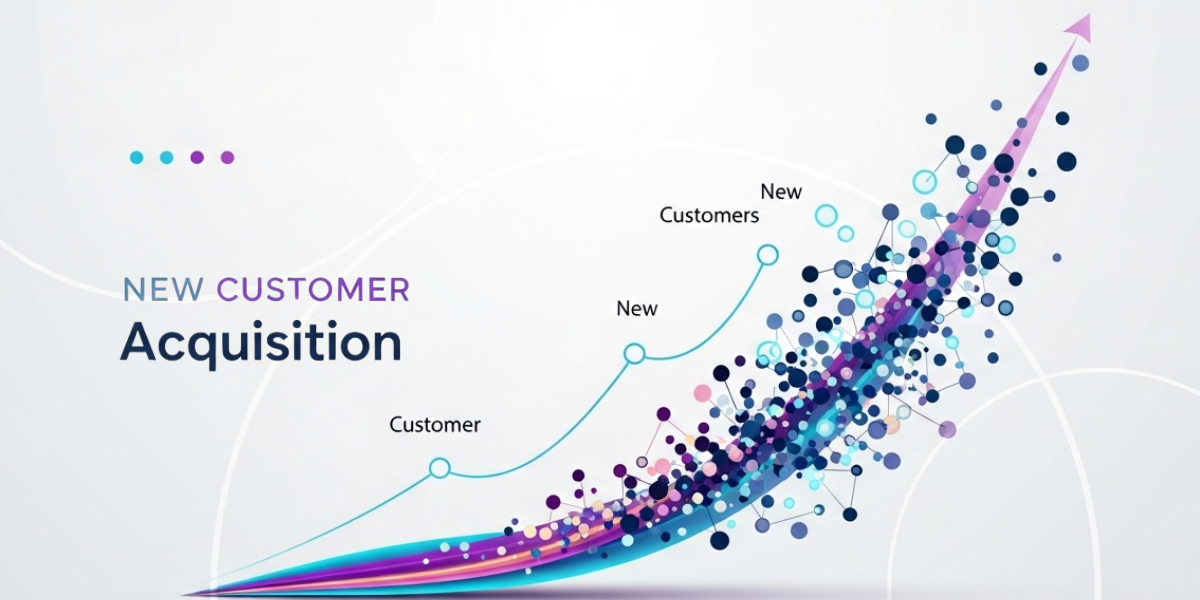
New customer acquisition is the process of attracting and converting people who have never purchased from you before.
Think of it as everything a business does to find potential buyers, earn their interest, and get them to make a purchase—from the first time someone sees your ad all the way to completing a transaction.
The process of acquiring new customers typically involves:
Here are the reasons why customer acquisition matters for any business growth:
Businesses need to acquire new customers because they cannot depend on their current customers for an infinite period. A business of 1,000 customers loses 200–250 per year without a single misstep. In three years without acquisition, the same business can lose nearly half its customer base. Customers change their shopping patterns or develop new preferences. Acquiring new customers helps your business build a stable foundation, supporting long-term retention and consistent growth.
New customers mean:
When you focus on acquiring new buyers, your brand reaches audiences beyond your current circle. This boosts brand visibility, improving recognition and strengthening your competitive position in the market.
Each new conversion has few benefits:
Over time, this creates momentum that drives organic growth.
Existing customers have a ceiling on how much they'll spend. New customers represent entirely new revenue pools. Companies that rely solely on existing customers face unpredictable revenue. Expanding your customer base reduces this risk and creates more stable income streams
When you bring in consistent new prospects, then:
Growth becomes strategic rather than accidental.
First purchase is only the beginning. When someone buys once, they can buy again. A new buyer today can become a loyal customer tomorrow. The acquisition of new customers needs to be understood because it directly influences lifetime customer value.
Customer acquisition marketing is every strategy, channel, and tactic used to bring new paying customers into your business. It runs from the first brand impression through to the first completed purchase — and it covers:
That last point is critical. 97% of first-time website visitors leave without purchasing (Baymard Institute). Every acquisition channel above creates warm audiences — people who've seen your brand and shown interest — who then leave without converting. Without a remarketing layer to re-engage them, the majority of acquisition spend is structurally underperforming.
Successful long-term results require businesses to implement structured customer acquisition strategies. Here are the core steps for building a strong customer acquisition strategy:
Understanding your audience — who you want to target — is the first step. Identify demographics, customers' interests, behaviors, and pain points. Precise targeting reduces wasted ad spend and increases conversion rates.
Why should someone choose your brand? Clear messaging helps visitors understand your benefits instantly.
No single platform can serve as the ideal solution for all brands. B2B brands may focus on LinkedIn. Fashion brands may focus on Instagram. E-commerce brands may focus on Google Ads. Choosing the right channels requires understanding where your audience is most active. Each plays a different role — don't expect every channel to close cold traffic directly.
Traffic is useless without conversion. Your website must be:
A good landing page converts visitors into buyers efficiently. The average landing page converts at 2.35% while the top 25% convert at 5.31%+ (WordStream).
Measure cost per acquisition. Improve creatives regularly. Monitor conversion rates, Click-through rates, and Customer lifetime value. Acquisition is not one-time work. It is continuous optimization.
Some companies hesitate to invest in growth campaigns. They focus only on short-term ROI. Customer acquisition is not just a cost — it's a strategic investment with compounding returns.
Here’s why:
Brands that stop investing in acquisition eventually slow down. Growth requires continuous effort.
Acquisition does not end at the first visit. This is the most commonly overlooked reality in customer acquisition marketing. When someone visits your site through a paid ad and leaves without buying, they are a warm prospect — not a lost cause. Without a system to re-engage them, the spend that brought them there is wasted.
The acquisition gap in numbers: Your paid campaign reaches 100,000 people. 3% visit your site — 3,000 warm prospects. 97% leave without buying — 2,910 visitors lost. With a proper smart remarketing system, a meaningful percentage return and convert at 50–70% lower CPA than reaching cold audiences again. Your acquisition spend just got significantly more efficient — without increasing the budget.
Instead of losing them, remarketing helps in brings them back. And the result;
Many businesses think remarketing only targets past visitors. However, professional remarketing agency can do much more.
By optimizing campaigns and re-engaging potential buyers effectively, we improve the entire acquisition funnel.
Tracking the right metrics allows you to adjust campaigns quickly and protect profitability. Key indicators include the following:
These numbers show if campaigns are working. Improvement in these metrics signals strong execution.
For online brands especially, competition is intense. New products appear daily, and buyers have endless options to choose from.
Here’s why continuous acquisition is critical:
The organization requires ongoing marketing expenses to maintain its public visibility. The moment you stop bringing in new customers, competitors quickly capture your market share.
A dedicated remarketing ads agency focuses on performance. Instead of running basic ads, they use
This ensures your brand stays visible to engaged users long after their first visit, keeping them in the funnel. Pairing acquisition campaigns with remarketing delivers stronger ROI and higher conversion rates.
Acquiring fresh buyers is not just about immediate sales. It also supports:
The acquisition of new customers generates advantages that companies can utilize for an extended period.
Over time, a strong acquisition engine becomes self-reinforcing, with organic growth reducing reliance on paid channels
The importance of new customer acquisition cannot be ignored in today’s competitive market. Businesses need to attract new customers who will become permanent customers to achieve their growth objectives. A remarketing ads agency keeps your brand at top-of-mind for interested users who haven't yet converted.
Data-driven planning — precision targeting, optimized funnels, and expert campaign management — consistently delivers long-lasting results.
Whether you run an eCommerce store, SaaS product, travel site, or affiliate network, a structured approach to customer acquisition builds the stability and scalability needed for long-term growth.
The acquisition investments you make today compound into a stronger, more competitive business tomorrow.